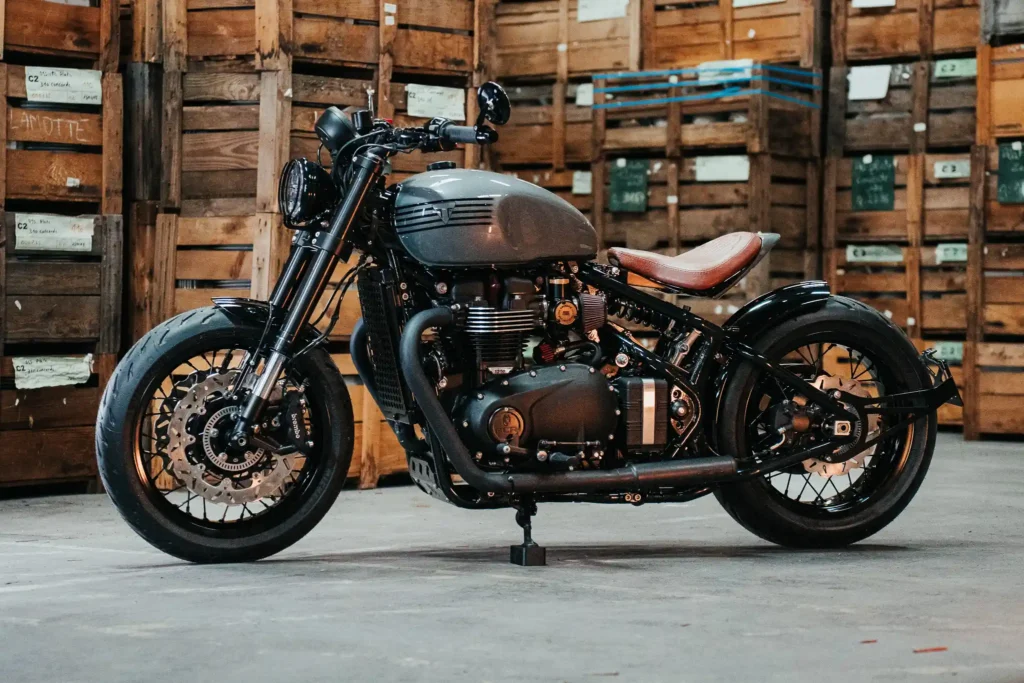
The cafe racer genre is still loved today from the UK to Japan. A bobber was originally called a bob-job from the 1930s through 1990s. The cut-down was based on the Harley-Davidson J series v-twin. In 1933 the AMA introduced Class C racing for motorcycles. The Harley-Davidson XLCR was manufactured between 1977 and 1979. The value of cafe racer bobber lies in connecting visual character with checks a reader can make independently. Attention stays on silhouette, bodywork, riding position, wheel choice, proportions, and historical cues. Readers should also distinguish factory-looking integration from verified factory equipment. Clean routing, matching finishes, or consistent proportions may suggest planning, but appearance alone cannot establish origin, material, or installation quality.
Notes Before Relying on One Image
Among the references, two captions help frame the range of presentation: "Triumph Bobber Black Cafe Racer | Reviewmotors.co" and ""Sixty-Nine" the sexy bobber - Cafe Racer World" . Compare their treatment of silhouette, bodywork, riding position, wheel choice, proportions, and historical cues; differences may reflect purpose, camera angle, or incomplete captions.

Building a Reliable Assessment
Document the intended use first and separate period-inspired styling from claims about actual age or factory configuration. Visual resemblance alone does not verify history, specification, or original equipment.

Comparing References Side by Side
Ultimately, cafe racer bobber becomes clearer when observations move from overall proportions to details and every material claim is verified.

Frequently Asked Questions
Compare purpose first, then review silhouette, bodywork, riding position, wheel choice, proportions, and historical cues.