Drivers staring in their rearview mirrors often react to a giant pink narwhal or a fuzzy cow cruising down the highway at sixty miles per hour. Fabric motorcycle helmet covers stretch over standard full-face lids, transforming functional safety gear into animated characters, fierce animals, or high-visibility statements. While riders adopt them primarily for humor, visibility, and group rides, these fabric accessories introduce specific aerodynamic and maintenance factors that every motorcyclist should weigh before strapping one on.
Material Construction and Elastic Fit
Most standard helmet covers rely on stretchable fleece, faux fur, or synthetic textiles fitted with an elastic baseline. This design allows the fabric to conform snugly over the curved contours of a full-face helmet without interfering with the visor mechanism. Openings are left for the face shield, while integrated pull-cords or elastic hems keep the fabric anchored. Because helmets vary significantly in shell size and chin bar protrusion, matching the cover dimensions to the specific helmet shape prevents loose fabric from bunching or shifting during head checks.
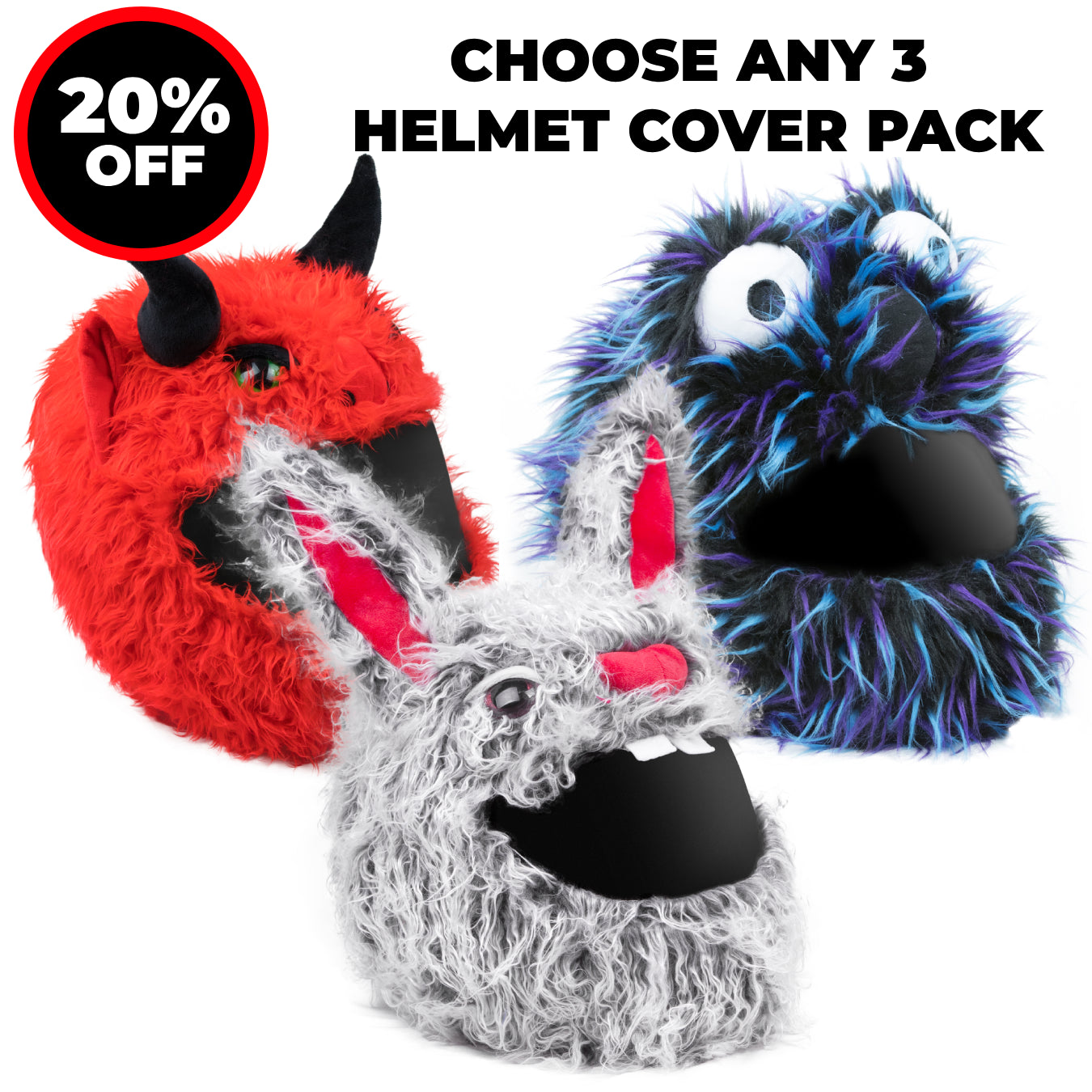
Popular Visual Styles: From Cartoon Animals to Birds of Prey
The market features a wide spectrum of visual designs, ranging from domestic livestock like cows to mythological creatures and predators. A plush pink narwhal model adds a humorous element to group commutes, while an eagle design uses feathered texturing and sharp color contrasts to mimic a bird in flight. Sloths, monsters, and seasonal themes also populate the category. Beyond novelty, these distinct shapes help motorists spot riders more easily in heavy traffic, breaking up the standard silhouette of a monochromatic helmet.

Aerodynamic Drag and Highway Realities
Adding fabric and protruding elements like horns, ears, or beaks alters the aerodynamic profile of a helmet. At lower city speeds, the difference is negligible. However, highway riding introduces significant wind resistance against loose panels and stuffed appendages. High-speed turbulence can pull slightly on the helmet, increasing neck fatigue over long distances. Riders planning extended highway trips typically reserve these accessories for local rides, rallies, or short commutes where top speeds remain moderate.

Maintenance, Weather, and Cleaning
Fabric covers absorb road grime, exhaust fumes, moisture, and bug splatter just like textile riding jackets. Synthetic materials typically allow for hand washing or gentle cycle machine washing, followed by air drying to preserve elasticity. Rain poses another practical consideration; untreated fabric holds water, adding weight to the helmet and increasing drying times once the rider reaches their destination. Storing the cover completely dry prevents mold growth and fabric degradation.

Frequently Asked Questions
Most covers sit externally over the certified helmet shell without modifying the structural integrity or energy-absorbing EPS foam. However, they are non-certified accessories and should not interfere with visor operation or retention systems.
Standard covers utilize stretchable elastic designed to fit most adult full-face helmets ranging from small to XXL. Modular helmets with hinged chin bars or extreme aerodynamic spoilers may require careful fitting.
High-quality covers feature elastic openings and sometimes secondary tether points to prevent slippage. Even so, bulky attachments will catch the wind and can create noticeable drag above standard highway limits.


